Things to Do in Maputo in January
January weather, activities, events & insider tips
Shoulder Season · Good Value
January Weather in Maputo
Long-run averages for January
87°F (30°C)
High Temp
72°F (22°C)
Low Temp
6.7 inches (170 mm)
Rainfall
74%
Humidity
13
Sunny-Day UV
⚠ Malaria risk peaks in January due to wet-season mosquito breeding. Prophylaxis medication and DEET-based repellent are both essential, not a choice between the two. Evening and post-rain hours carry the highest exposure risk.
⚠ Sudden heavy downpours can cause flash flooding in low-lying parts of the Baixa and residential neighbourhoods with poor drainage. Avoid crossing flooded streets on foot. Water depth and hazards like open storm drains are impossible to judge from above.
⚠ Intense UV exposure persists even on overcast mornings. January cloud cover breaks unpredictably, and sunburn can develop rapidly during early outdoor activities when the air temperature feels cooler than the radiation level suggests.
Is January Right for You?
Weigh the advantages and considerations before booking
Advantages
- + Maputo's Indian Ocean coast hits peak swimming temperature in January. Warm water and long daylight hours make beach days and marine excursions to Inhaca Island comfortable rather than aspirational. Pack reef-safe sunscreen.
- + The wet season transforms Maputo Special Reserve and the southern coast into lush green landscapes teeming with birdlife. Migratory species from across southern Africa arrive specifically for this window. Bring binoculars.
- + Summer holiday energy puts Maputo at its most socially alive. The waterfront barracas along Costa do Sol are packed. Live marrabenta music spills out of neighbourhood bars. The city's restaurants extend their hours well past midnight. Book tables early.
- + January falls outside the international tourist peak for Mozambique. Accommodation availability is driven mostly by domestic and regional visitors rather than charter-flight crowds. Bookings tend to be easier to secure than during the cooler dry months from June through September. Plan ahead anyway.
Considerations
- − January is Maputo's wettest month at 170 mm (6.7 inches). Afternoon thunderstorms can dump heavy rain in under an hour. Low-lying streets in the Baixa flood. Unpaved roads in residential neighbourhoods turn to mud. Carry waterproof bags.
- − The combination of 30°C (87°F) heat and 74% humidity makes midday outdoor activity exhausting. Not all restaurants, museums, or transport options are air-conditioned. The heat follows you indoors. Schedule indoor stops.
- − Mosquito activity peaks with the rains, elevating malaria risk significantly compared to the dry winter months. Prophylaxis is not optional. Evening hours along the waterfront or in parks require serious insect repellent. Cover up after dark.
Best Activities in January
Top things to do during your visit
January hits Maputo with everything the southern hemisphere summer has. Temperatures push toward 30°C by midday. The air thickens with moisture rolling off the Indian Ocean, carrying the salt-and-diesel scent of the port into the tree-lined avenues of the Baixa. This is the wettest month of the year. Roughly 170 mm of rain falls in concentrated afternoon downpours that send streams rushing through the gutters along Avenida Julius Nyerere and leave the flame trees dripping and impossibly green. Mornings break clear, though. The light at seven o'clock has a washed, golden quality that makes the city's crumbling Art Deco facades and their Portuguese-era ironwork look like something out of a hand-tinted postcard. By nine the heat is already serious. The shade beneath the jacarandas on Avenida Friedrich Engels becomes less decorative and more functional. The rhythm of Maputo in January follows this wet-season cycle. Locals shift their days earlier. They fill the Fish Market at Costa do Sol before the sun is directly overhead, grilling prawns the size of a forearm over charcoal while the smoke curls into the humid morning air. Restaurants along the Marginal come alive in the late afternoon once the rain passes, tables dragged back onto terraces still dark with water, the smell of peri-peri sauce and grilled chicken rising from every other doorway. The beaches south of the city, the long sweep of sand toward Catembe, are warm enough for swimming but emptier than they will be during the drier months of June and July, when South African visitors cross the border in numbers. January belongs mostly to Mozambicans themselves. The city has a local, unhurried quality that rewards the traveler willing to slow down, eat well, and let the rain dictate the afternoon's plans. For those looking to venture beyond Maputo's limits, January also is a period when the surrounding landscape is at its most lush. The reserves and parks within day-trip range are thick with new growth, rivers run full, and birdlife peaks with migrants arriving from the northern hemisphere. Visibility in the bush can be reduced by the dense vegetation. The trade-off is a landscape so saturated with green it borders on surreal.

Eswatini (Swaziland) 1-day Country Tour from Maputo
guided_experienceThe Eswatini (Swaziland) 1-day Country Tour from Maputo crosses the Mozambican border and climbs through the rolling hills of one of Africa's smallest kingdoms, where the air cools noticeably and the scent of pine plantations replaces the coastal humidity of Maputo. The day covers cultural sites and craft markets in the Ezulwini Valley, where the sound of Swazi choral singing drifts from roadside workshops, and includes stops at nature reserves where the highland grasslands open into wide views of the Lubombo Mountains. It is a genuine country-crossing experience compressed into a single long day, returning to Maputo by evening with the border formalities handled by the guide.
A full-country immersion in Eswatini, from highland craft markets to mountain overlooks, departing and returning to Maputo with no logistics to manage.
Insider tip: Bring a light jacket for the Ezulwini Valley, which sits at higher elevation and can feel ten degrees cooler than Maputo, even in January.
This month: January's rains make the Eswatini highlands intensely green, and the cooler highland air offers relief from Maputo's coastal heat.

Maputo National Park (Maputo Special Reserve) Full-day Tour
day_tripThe Maputo National Park (Maputo Special Reserve) Full-day Tour heads south from the city into a coastal wilderness where freshwater lakes sit just behind the dunes and elephants move through thick sand forest with a quiet that is startling given their size. In January the reserve is at peak green, with the wetland areas filled and the birdlife dense enough that the calls of fish eagles and weaverbirds form a continuous backdrop. The tour typically includes a game drive through the savanna sections, where giraffe and zebra are visible against the tall grass, and time along the marine edge where the warm Mozambique Channel laps onto beaches that see almost no foot traffic.
One of the few reserves in southern Africa where big game roams within sight of the Indian Ocean, accessible as a single day out of Maputo.
Insider tip: The sandy reserve roads can be slower after January rains, so expect longer transit times between sightings and bring extra water for the vehicle.
This month: January's rainfall fills the reserve's freshwater pans, drawing large concentrations of waterbirds and making the landscape dramatically lush compared to the dry winter months.

Kruger Park 2-day Safari from Maputo (Open-backed Safari Vehicle)
otherThe Kruger Park 2-day Safari from Maputo is one of the more notable cross-border logistics feats available to travelers in southeastern Africa: you leave Maputo, cross into South Africa, and by afternoon you are deep inside one of the continent's great game reserves, scanning the scrubby mopane woodland from an open-backed vehicle where every thorn-branch snap and hyena whoop arrives without the buffer of glass or air conditioning. The two-day format allows for both a sunset drive and an early morning session, which is when the big cats tend to be on the move, their tawny shapes materializing out of the grey dawn light. Overnighting inside or near the park means the smell of bushveld campfire smoke and the distant roar of lions become part of the experience rather than a story told second-hand.
Open-vehicle game drives in Kruger, with the intimacy of hearing and smelling the bush unfiltered, launched directly from Maputo.
Insider tip: January falls in Kruger's green season, when the bush is thick and animals disperse from waterholes, so manage expectations on density of sightings but enjoy far fewer vehicles at each encounter.
This month: January is Kruger's wet season, with dense vegetation that can make spotting harder but also brings newborn impala and wildebeest calves, along with excellent birding as migrants are present.

Maputo Essential Walking Tour
walking_tourThe Maputo Essential Walking Tour takes you through the Baixa on foot, which is the only honest way to absorb the city's architectural character. The route threads past the Iron House, an all-metal residence designed by Gustave Eiffel that radiates stored heat like an oven in January, past the Central Train Station with its copper dome gone green with patina and its interior of polished marble and wrought iron, and through the narrow streets where the plaster peels off colonial-era buildings to reveal older layers of paint in faded blues and yellows. The guide contextualizes the Portuguese colonial period, the independence struggle, and the civil war that followed, giving weight to buildings that might otherwise read as merely photogenic. The sound of the city fills the gaps between stops: car horns, the clatter of chapa minibuses, vendors calling out prices for cashews roasted in blackened pans on the sidewalk.
The only way to understand Maputo's layered history is on foot with someone who can read the architecture, and this tour delivers exactly that.
Insider tip: Start the walk before nine in the morning if you have a choice of departure times. By midday the pavement radiates enough heat to feel through your shoes, and the afternoon rains can cut the route short.
This month: January heat makes midday walking uncomfortable. Morning slots are strongly preferable.

2-Day Maputo Special Reserve Guided Tour
guided_experienceThe 2-Day Maputo Special Reserve Guided Tour extends the single-day experience into an overnight stay that changes the character of the visit entirely. After dark, the reserve transforms: the thick coastal bush fills with the rasping calls of nightjars, the rustle of smaller mammals crossing the sandy tracks, and, in the freshwater zones, the grunting of hippos emerging to graze. The second morning game drive catches the reserve at its most active, with predator tracks fresh in the damp sand and the early light turning the Indian Ocean, visible from the eastern ridges, into a sheet of hammered copper. Two days allows the guide to reach the more remote southern sections where the big elephant herds tend to concentrate, well away from the main access roads.
The overnight format unlocks the reserve's nocturnal world and its more remote elephant country, neither of which the single-day tour can reach.
Insider tip: Pack a headlamp for the overnight camp and waterproof bags for your camera gear; January downpours arrive fast, and the coastal location means even the night air stays warm and damp.
This month: January rain fills the reserve's seasonal wetlands, concentrating birdlife and amphibian choruses that make the overnight stay atmospheric.

Tour about Art and Architecture in Maputo City
guided_experienceThe Tour about Art and Architecture in Maputo City is the more specialized companion to the general walking tour, focusing tightly on the city's notable design heritage and its contemporary art scene. The route includes the Nucleo de Arte, a cooperative studio space where painters and sculptors work in open courtyards, the smell of turpentine and welding flux mixing with the humidity, and the Pancho Guedes buildings scattered across the Polana and Sommerschield neighborhoods, their fantastical concrete forms looking like something between Gaudí and a fever dream shaped by the tropics. In January the galleries and studios tend to be quieter, with many South African tourists not yet arrived, meaning you can often speak directly with working artists and watch the making process rather than simply viewing finished pieces behind glass.
Maputo's architecture and art scene is among the most distinctive in sub-Saharan Africa, and this tour connects the colonial, modernist, and contemporary threads with local expertise.
Insider tip: Ask the guide about the Mafalala neighborhood murals if the itinerary does not already include them. The street art there tells a compressed history of Mozambican music and resistance in painted concrete.
Where to Stay in Maputo in January
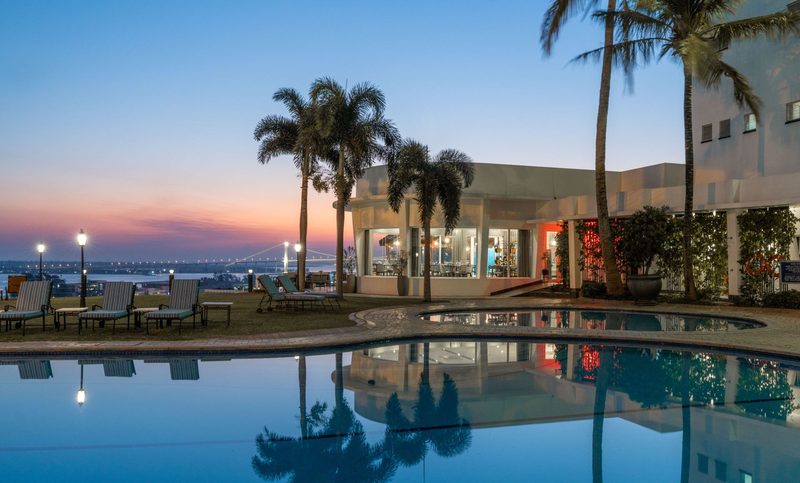
Hand-picked hotels across price tiers for January travellers.

Public Holidays in January
Dates that affect opening hours, transport and crowds
Dia de Ano Novo
Known in English as New Year's Day. Observed nationwide as a public holiday.
Dia de Ano Novo
Known in English as New Year's Day. Observed nationwide as a public holiday.
Packing Checklist
Bookmark this page — your progress is saved between visits
Need the full list with shopping links?
Climate-specific gear, brand recommendations, and what to leave at home.
View Maputo Packing List →Essential Tips
Insider knowledge and common pitfalls to avoid
Insider Knowledge
The afternoon storms in January almost always build from around 2pm, hit hard between 3pm and 4pm, and clear by 5pm. Locals treat this window the way other cities treat a lunch break. They duck into a bar or barraca, order a cold 2M or Laurentina, wait it out, and re-emerge when the air is cooler and the light is golden. Schedule your indoor activities, your museum visits, your Mercado Central browsing for that storm window, and save the waterfront for the hours afterward.
January is peak cashew and mango season in Maputo. Street vendors roast cashews on charcoal braziers on nearly every major corner in the Baixa and along Costa do Sol, and Mozambique is one of the world's major cashew-producing nations, so what you are eating is the real thing at its freshest. The mangoes, sold from plastic tubs or spread on cloth under trees, are ripe to the point of bursting. Sweet with a faintly resinous edge that supermarket imports will never replicate.
The old Catembe ferry still operates alongside the Maputo-Catembe suspension bridge, and the 20-minute crossing is far cheaper than a taxi over the bridge. More, the view of Maputo's skyline from the water, the cathedral dome and tower blocks catching the morning light above the bay, is the single best vantage point the city offers. Locals who commute across the bay ride it daily without a second thought. Sharing that 7am crossing is a better introduction to the city than any orientation tour.
FEIMA, the Saturday craft and food market in the Jardim dos Namorados park, is the best single stop for Mozambican food and artisan crafts without tourist-inflated pricing. In January it opens early, around 8am, and by 10am the heat pushes most people into the shade. Get there at opening when the stalls selling capulana fabrics, carved wooden sculptures, and batik prints are freshest. The food vendors serving matapa, chamussas, and grilled prawns are still cooking in small batches.
Avoid These Mistakes
Skipping malaria prophylaxis or starting it late. January is Maputo's wettest month, mosquito activity peaks in the evenings and after rain, and malaria is a serious risk here. Some travellers assume repellent alone is sufficient, or that the city is urban enough to be safe. It is not. Consult a travel doctor well before departure. Start your course on the recommended schedule.
Planning outdoor walking tours or beach excursions for midday. The combination of 30°C (87°F) heat and 74% humidity between 11am and 3pm could fairly be called a real risk for heat-related illness, for visitors arriving from cooler climates. Early morning and late afternoon are the only comfortable windows for sustained outdoor activity in Maputo in January.
Treating the afternoon rain as a reason to write off the day. First-time visitors see the thunderstorm building and retreat to their rooms, cancelling everything from 2pm onward. Locals know the storm passes in under an hour. The post-storm hours from 5pm onward are the best part of a January day in Maputo: cooler air, softer light, and the city at its most atmospheric. Plan around the rain, not against it.
Ready to plan your trip to Maputo?
Now that you've got the research covered, here's where to go next.
Explore More Activities in Maputo
Didn't see anything interesting yet?
Browse Viator's full catalog of tours, day trips, food experiences, and private guides in Maputo.
See All Maputo Tours on Viator